Response to “Click Moments and Coming Out” and the idea of “This is What a Feminist Looks Like”
February 16, 2020
I had never read anything blatantly labeled “feminist” before taking this course and being exposed to Jessalynn Keller’s Girls’ Feminist Blogging in a Postfeminist Age. I took a course last semester about our world in a post-truth era that focused mainly on the creation and impact of fake news where we brushed on many different societal issues, but we never read anything by a woman about feminism. My lack of exposure to feminist literature means I had no idea what to realistically expect when given this reading.
My expectations before reading the chapter was that it would be very dense and political. The chapter, instead, focused on the actual lives and blogs of young feminists and analyzed the similarities and differences between them, their blogs, and what being a feminist means to each of them. I am very glad these anecdotes were included because it makes this subject a lot more real and less political and intimidating, which is part of why I have not read any prior self-stated feminist literature. I find feminism to be a highly contested subject that can be very intense and involve many subcategories that are even more highly contested, like the wage gap and a woman’s right to choose. Focusing on feminism through the lense of young female bloggers illuminates that there are many types of feminists who show their feminism in different ways, and that there are many acts and moments that can be considered inherently feminist. I related a lot to the discussion on “I’m-not-a-feminist-but”, which is where people align with feminist views but do not consider themselves to be feminist. This ties into the idea of a “click moment”, which I discussed in the previous two posts, and also the “coming out”, of sharing your personal feminist identity on a public platform online.
I appreciated reading about Amandine and her relationship to both feminism and orthodox Judaism. I myself am Jewish, and within most religious groups there can be an element of oppressing women. I appreciated Amandine’s perspective on melding the two worlds, and I think I may check her blog out to get a better understanding of how she reconciles certain Jewish religious practices, like the rituals surrounding menstruation, with being a feminist. I also appreciated reading about Renee’s blog where she combats stereotypes of “what a feminist looks like” and published a photo series of over 100 diverse feminists. I am certain this was a “coming out” moment for many of those individuals, and that takes a lot of courage. When the word feminist is said or written, there is often a certain image that comes to mind, and the author also stated that it feminism is usually affiliated with lesbianism as well. I think Renee’s photo series is incredibly important in breaking the stigma about being a feminist and challenging the stereotype that only certain types of people and certain types of women can be feminist based on looks alone.
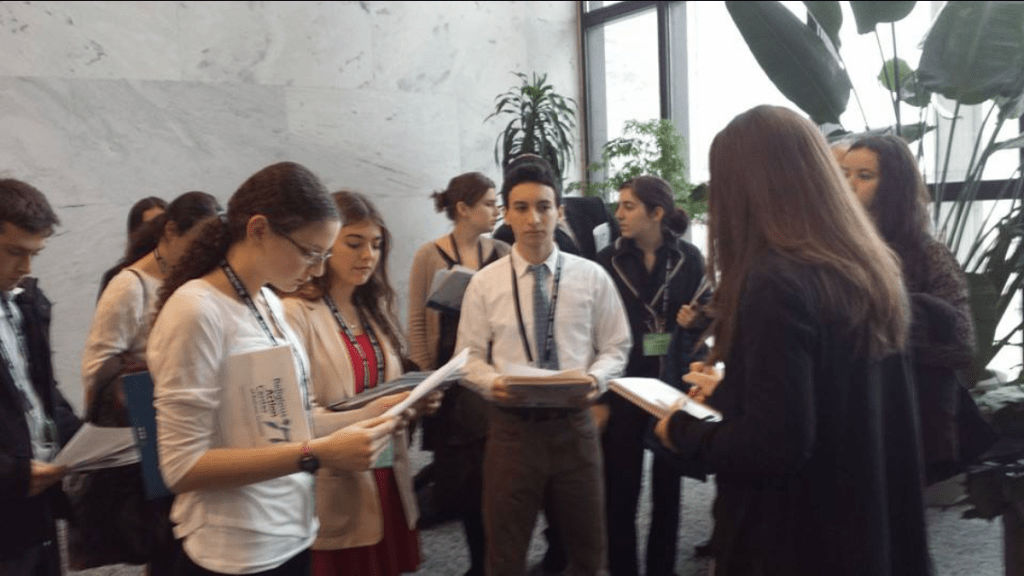
I have not identified myself online as a feminist, and I believe there is still much I have to learn and educate myself on before I would even consider posting anything like that. Women come up against a lot of scrutiny online, by both men and women, and being a feminist without knowing all the facts and how you feel about every issue facing women today seems like dangerous territory. It was refreshing to see in the article that many of the young feminist bloggers were using the blogs to shape their feminist identity and that you don’t already need to know everything about everything or have distinct opinions on every topic under the umbrella of feminism to be able to publicly identify as a feminist without being constantly torn down or cancelled.
We have been talking a lot about performance in class and the difference between online persona and reality. The video we watched, “A family finds entertainment”, was incredibly confusing and bizarre, but overall exemplified the dramatization of YouTube and other large social media platforms. To get clicks and likes you often need to be wild and larger than life in front of a camera or use clickbait to suck people in. I think using a blog to explore feminism is a more attainable platform than YouTube or Instagram, since it is a more niche form of social media and is not on everyone’s radar. Moving to a platform like TikTok or Instagram feels more intimidating, and I do not think viewers are along for the journey in the same way blog followers are. Influencers are expected to know all the latest news and have set views. Being able to type and work things through on a platform like a blog or Twitter feels more forgiving since it is both more personal and more anonymous. You can post longer and more niche content without showing your face or being comfortable in front of a camera. I think that having a feminist blog or Tumblr or Twitter allows for more growth and discovery than many of the more popular social media plaforms, and I look forward to reading the next few Keller chapters to see if any of these themes are discussed.
References
Girls’ Feminist Blogging in a Postfeminist Age by Jessalynn Keller
“A Family Finds Entertainment” by Ryan Trecartin
 Science Student in a Cinema Class